Beef Liver and Onions: The Absolute Best Classic Recipe
Learn how to cook beef liver and onions the right way, with tender, flavorful results every time. This classic organ meat recipe is rich, satisfying, and surprisingly simple to master.

The Recipe That Converts Liver Skeptics Into True Believers
Beef liver has a reputation that precedes it, and not always in a flattering way. For a lot of people, the memory of overcooked, bitter, chalky liver served in a school cafeteria or at a well-meaning grandparent's table is enough to keep them away for life. But here is the truth: that liver was just cooked wrong. Done right, beef liver is tender, deeply savory, and genuinely satisfying in a way that few other proteins can match.
This recipe is the one that changes minds. Slow-caramelized onions, a quick pan sauce, and one simple trick (the milk soak) transform a misunderstood ingredient into a dish worth craving. Whether you are already a devoted fan of eating beef liver and organ meat recipes or you are cautiously curious, this is the method that delivers the absolute best liver and onions every single time.
Getting great results from beef liver comes down to technique, and having the right pan makes a real difference. A heavy cast iron skillet holds heat evenly and gives you that perfect sear without the liver stewing in its own juices.
Why Beef Liver Deserves a Spot on Your Table
Before we talk technique, let's talk about why so many home cooks and health-focused eaters are rediscovering organ meat recipes in a big way. Beef liver is, quite honestly, one of the most nutritious foods you can eat. A single serving provides an impressive hit of:
- Vitamin B12 (well over 1,000% of your daily value)
- Iron in a highly bioavailable heme form
- Vitamin A for immune function and eye health
- Folate, zinc, copper, and CoQ10
- High-quality complete protein
The nose-to-tail and beef organs movement has brought a whole new generation to this cut, and for good reason. If you have been curious about elk liver or other wild game livers, the good news is that this exact method works beautifully for those too.
The Secret: The Milk Soak
If you have ever eaten liver that tasted aggressively metallic or unpleasantly bitter, it almost certainly skipped this step. Soaking your liver slices in whole milk for at least 15 minutes (up to an hour) is the single most important thing you can do before cooking.
The milk draws out blood and neutralizes some of the stronger compounds in the liver, resulting in a far milder, cleaner flavor. It also gently tenderizes the meat. Do not skip it, and do not rush it.
Chef's Tip: If you want an even more delicate flavor profile, look for calf's liver (veal liver) at your local butcher. It is thinner, more tender, and has a subtler taste than standard beef liver, making it an excellent gateway for those new to how to prepare and cook beef liver.
Building the Flavor Base: Caramelized Onions
The onions in this recipe are not an afterthought. They are the supporting act, and they need time. Low and slow is the only way to develop that deep, jammy sweetness that balances the richness of the liver perfectly.
Plan on about 15 to 18 minutes over medium heat, stirring occasionally. Rushing this step by cranking the heat will give you softened onions rather than truly caramelized ones, and that matters for the final dish.
Once the onions are golden and fragrant, they come out of the pan so you can sear the liver in the same skillet, picking up all of those gorgeous browned bits.
How To Cook Beef Liver (Without Overcooking It)
Overcooking is the number one mistake people make when cooking liver and onions. The liver should be just barely pink in the center when you pull it from the pan. It will continue to cook slightly from residual heat, and that gentle pink center is what keeps the texture tender rather than grainy and tough.
Two to three minutes per side over medium-high heat in a hot, buttered skillet is all it takes. Work in batches if needed. Crowding the pan drops the temperature and causes the liver to steam rather than sear, which is exactly what you want to avoid.
After the liver is seared, a quick pan sauce made with beef broth, Worcestershire, and thyme comes together in minutes and ties every element of the dish together beautifully.
Ready to bring it all together? Here is the full recipe:
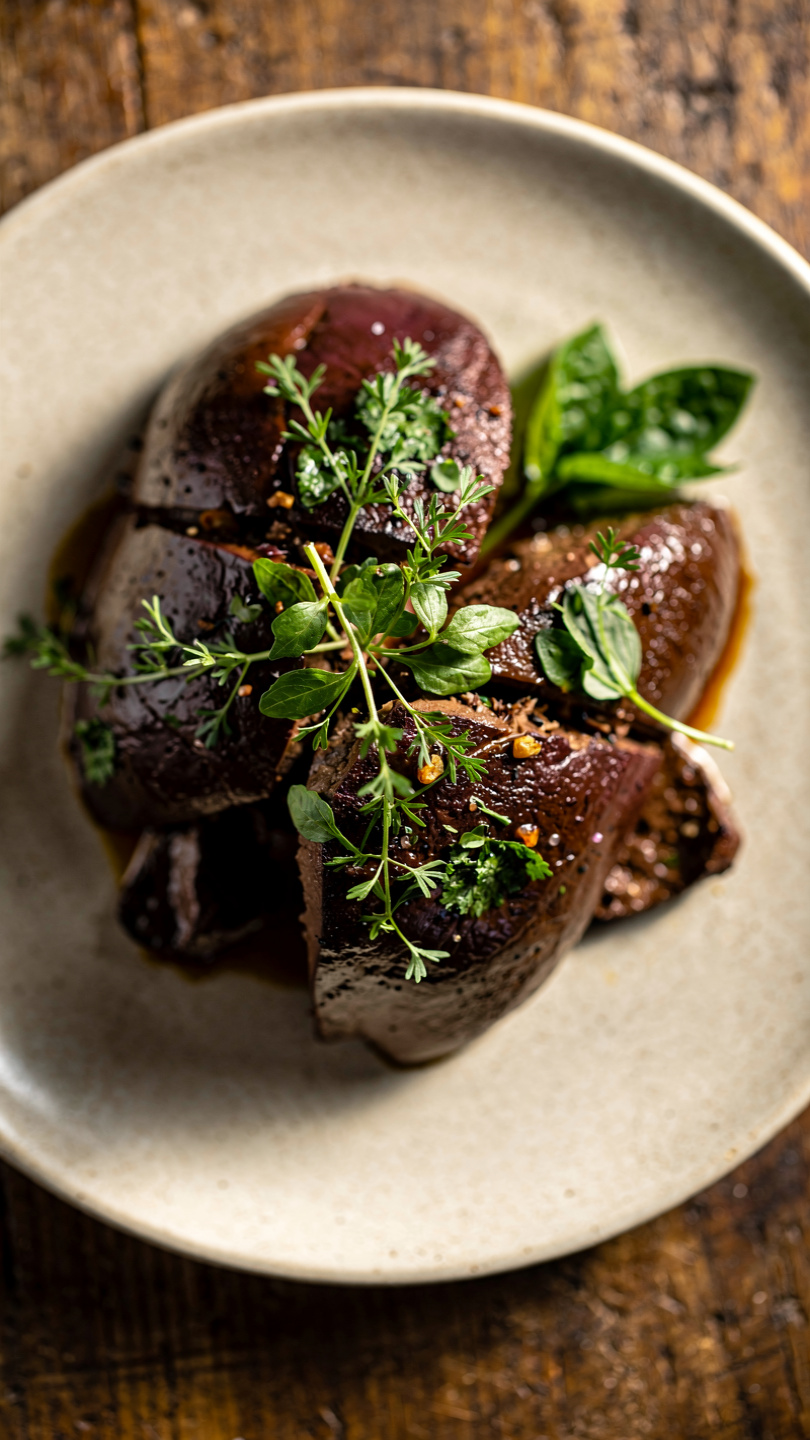
Beef Liver and Onions: The Absolute Best Classic Recipe
Learn how to cook beef liver and onions the right way, with tender, flavorful results every time. This classic organ meat recipe is rich, satisfying, and surprisingly simple to master.
Ingredients
- 1 1/2 lb beef liver, sliced about 0.5 inch thick, membrane removed
- 1 cup whole milk, for soaking
- 2 large yellow onions, thinly sliced into half-moons
- 1/2 cup all-purpose flour, for dredging
- 3 tbsp unsalted butter, divided
- 2 tbsp olive oil, divided
- 3 garlic cloves, minced
- 1/2 cup low-sodium beef broth
- 1 tbsp Worcestershire sauce
- 3 fresh thyme sprigs, leaves stripped, or 0.5 tsp dried
- 1 tsp kosher salt, plus more to taste
- 1/2 tsp black pepper, freshly ground
- 2 tbsp fresh flat-leaf parsley, chopped, for garnish
Instruction
Place the liver slices in a shallow dish and pour the milk over them. Let soak for at least 15 minutes, or up to 1 hour in the refrigerator. This step draws out bitterness and results in a much milder, more pleasant flavor.
While the liver soaks, heat 1 tablespoon of butter and 1 tablespoon of olive oil in a large heavy skillet over medium heat. Add the sliced onions and cook, stirring occasionally, for 15 to 18 minutes until they are deeply golden and caramelized. Add the minced garlic and cook for 1 more minute. Transfer the onion mixture to a plate and set aside.
Remove the liver from the milk and pat each slice thoroughly dry with paper towels. Season the flour with salt and pepper, then dredge each slice in the seasoned flour, shaking off any excess.
Increase the heat to medium-high. Add the remaining butter and olive oil to the same skillet. Once the butter is foaming, add the liver slices in a single layer, working in batches if needed to avoid crowding the pan.
Cook the liver for 2 to 3 minutes per side until nicely browned on the outside but still just slightly pink in the center. Do not overcook, as the liver becomes tough and grainy if left too long. Transfer the cooked liver to a warm plate.
Reduce the heat to medium. Pour the beef broth and Worcestershire sauce into the skillet, scraping up any browned bits from the bottom. Add the thyme and let the sauce simmer for 2 minutes until slightly reduced.
Return the caramelized onions and the liver slices to the pan. Toss gently to coat everything in the pan sauce and heat through for 1 minute.
Taste and adjust seasoning with salt and pepper. Garnish with fresh chopped parsley and serve immediately over mashed potatoes, egg noodles, or crusty bread.
Equipment
- Large heavy skillet or cast iron pan
- Shallow dish for soaking
- Paper towels
- Tongs
- Sharp chef's knife
- Cutting board
- Wooden spoon or silicone spatula
Notes
Serving, Storing, and Making It Your Own
Beef liver and onions is wonderful served over creamy mashed potatoes, buttered egg noodles, or thick slices of crusty bread to soak up the pan sauce. A simple green salad or roasted green beans on the side rounds out the meal perfectly.
Leftovers keep in the refrigerator for up to two days. Reheat gently in a covered skillet over low heat with a splash of beef broth to keep things moist. The microwave is not your friend here.
Once you are comfortable with the base recipe, you can experiment by adding a splash of balsamic vinegar to the onions, swapping the thyme for fresh sage, or finishing the pan sauce with a small knob of cold butter for extra richness. This dish rewards confidence and curiosity in equal measure.