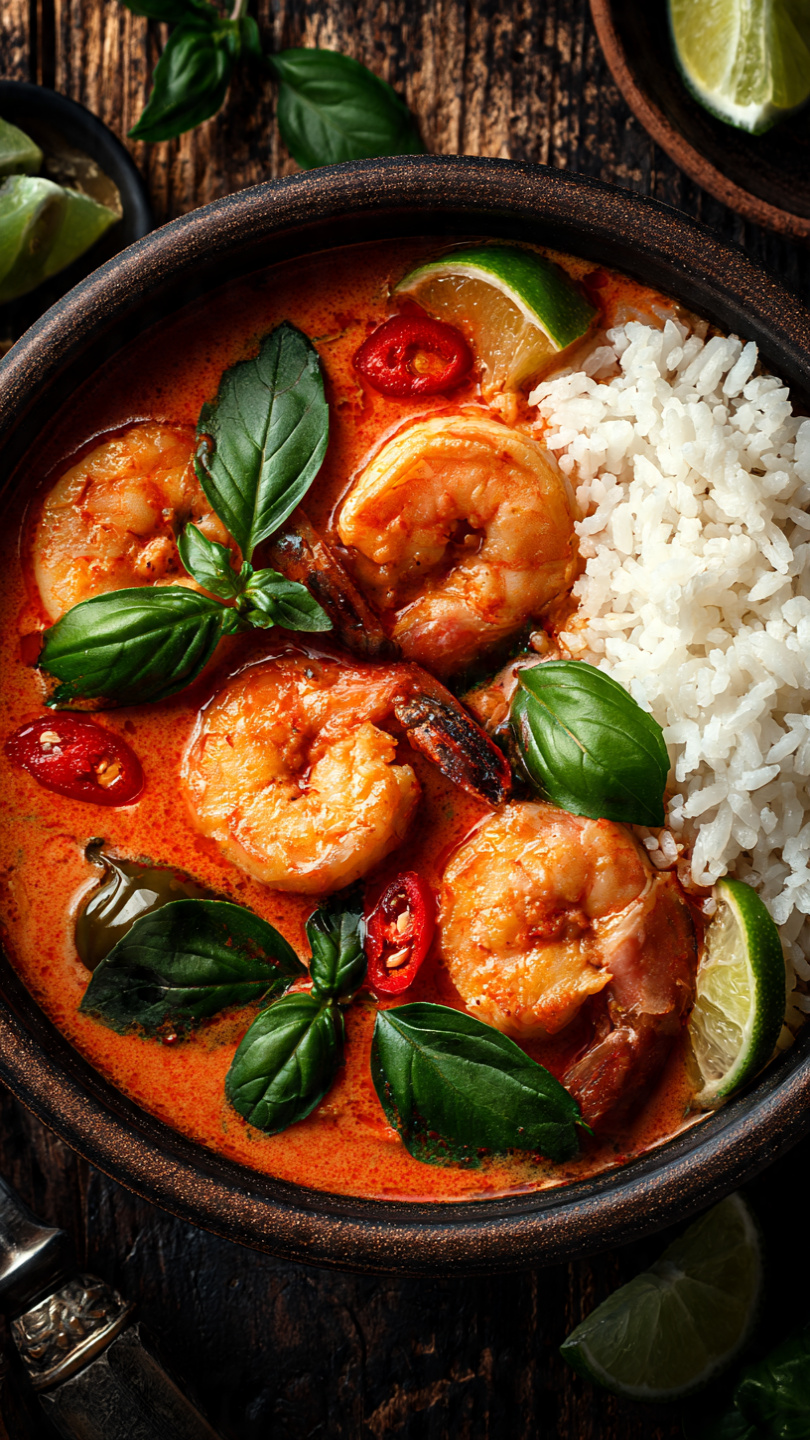
Thai Shrimp Curry With Coconut Rice
This Thai shrimp curry is rich, creamy, and loaded with bold flavors from coconut milk, red curry paste, and fresh Thai basil. Ready in under 40 minutes, it is the ultimate weeknight shrimp coconut curry recipe.

The Thai Shrimp Curry You Will Make on Repeat
This is not a watered-down, shortcut curry. This is the real deal: a deeply fragrant, creamy Thai shrimp curry built on a coconut milk base, bloomed red curry paste, and finished with fresh Thai basil and a squeeze of lime. It comes together in under 40 minutes, which means it is just as at home on a busy Tuesday night as it is at a dinner party.
If you have ever wondered how to make shrimp with coconut rice that actually tastes like something from your favorite Thai restaurant, this recipe is your answer. The trick is a few simple techniques that make a huge difference, and we will walk through all of them.
Why This Shrimp Coconut Curry Recipe Works So Well
The foundation of any great Thai curry recipe with shrimp is the sauce. We bloom the curry paste directly in the pan before adding liquid, which wakes up all those dried spices and concentrated aromatics in the paste. Combined with full-fat coconut milk, the result is a sauce that is luxuriously thick and complex without requiring hours on the stove.
The coconut rice is not an afterthought either. Cooking jasmine rice in a mix of coconut milk and water gives every grain a subtle sweetness and richness that makes the whole bowl feel cohesive. It is the perfect partner for this shrimp coconut milk recipe.
Chef's Tip: Always use full-fat coconut milk for curry. Light coconut milk is too thin and will give you a watery sauce instead of that rich, restaurant-quality texture you are going for.
Choosing the Right Ingredients and Tools
The quality of your red curry paste matters more than almost anything else in this recipe. Brands like Mae Ploy or Maesri are widely available and deliver far more depth and heat than the generic pastes you might find in the international aisle. For the coconut milk, look for a brand with a high cream content and no added gums or stabilizers if you can.
Having a good heavy-bottomed skillet or wok also makes a real difference when searing shrimp and building the sauce evenly.
Tips for Perfect Shrimp Every Time
Shrimp are fast-cooking and easy to overdo. Here is what to keep in mind:
- Dry your shrimp well. Pat them with paper towels before they hit the pan. Moisture is the enemy of a good sear.
- Sear first, finish in the sauce. Pull the shrimp out when they are just barely pink, then return them at the end. They will finish gently in the warm curry.
- Do not crowd the pan. Cook in batches if needed so the shrimp sear instead of steam.
- Size matters. Larger shrimp (16/20 count) hold up better in a bold sauce without getting lost.
This approach guarantees juicy, tender shrimp in every bite of your Thai shrimp curry with rice.
Building Layers of Flavor
The magic of a great shrimp coconut curry recipe comes from the layering. Garlic and ginger go in first. Then the curry paste gets cooked in the oil for a minute or two, which is called blooming. This single step transforms the paste from raw and sharp into something deeply savory and aromatic.
Fish sauce brings the salty, umami backbone. Brown sugar rounds out the heat. Fresh lime juice at the end lifts everything and keeps the sauce feeling bright rather than heavy. It is a classic Thai basil shrimp balance of salty, sweet, sour, and spicy that your palate will immediately recognize as distinctly Thai.
Chef's Tip: Taste and adjust the sauce before you add the shrimp back in. This is your moment to dial it in. A little more fish sauce, a pinch more sugar, or an extra squeeze of lime can make the whole dish.
Ready to bring it all together? Here is the complete recipe:
Thai Shrimp Curry With Coconut Rice
This Thai shrimp curry is rich, creamy, and loaded with bold flavors from coconut milk, red curry paste, and fresh Thai basil. Ready in under 40 minutes, it is the ultimate weeknight shrimp coconut curry recipe.
Ingredients
- 1 1/2 lb large shrimp, peeled and deveined, tails on or off
- 2 cups full-fat coconut milk, from two 13.5 oz cans, shaken well
- 3 tbsp Thai red curry paste, adjust to taste for heat level
- 2 tbsp fish sauce
- 1 tbsp brown sugar, or palm sugar if available
- 2 tbsp fresh lime juice, from about 1 large lime
- 4 garlic cloves, minced
- 1 tbsp fresh ginger, freshly grated
- 1 red bell pepper, thinly sliced
- 2 cups baby spinach or snap peas, packed; snap peas add great crunch
- 1/2 cup fresh Thai basil leaves, loosely packed; regular basil works in a pinch
- 1 tbsp coconut oil
- 1 1/2 cups jasmine rice, rinsed until water runs clear
- 1 cup coconut milk for rice, from the same can
- 1 cup water for rice
- 1/2 tsp salt for rice
- 4 lime wedges, for serving
- 1 tsp sliced red chili or red pepper flakes, optional, for extra heat
Instruction
Start the coconut rice first. In a medium saucepan, combine the rinsed jasmine rice, 1 cup coconut milk, 1 cup water, and 0.5 tsp salt. Bring to a boil over medium-high heat, then reduce to the lowest heat setting, cover tightly, and cook for 15 minutes. Remove from heat and let steam, still covered, for another 5 minutes. Fluff with a fork before serving.
Pat the shrimp dry with paper towels and season lightly with salt. Dry shrimp sear better and won't water down your curry sauce.
Heat the coconut oil in a large skillet or wok over medium-high heat. Once shimmering, add the shrimp in a single layer and cook for 1 to 2 minutes per side, just until pink and barely cooked through. Transfer to a plate and set aside. They will finish cooking in the sauce.
In the same pan, reduce heat to medium. Add the minced garlic and grated ginger and cook for 30 seconds, stirring constantly, until fragrant.
Add the Thai red curry paste and stir it into the garlic and ginger. Cook for 1 to 2 minutes, pressing the paste around the pan to bloom its flavors in the oil.
Pour in the 2 cups of full-fat coconut milk and stir to fully incorporate the curry paste. Bring to a gentle simmer.
Add the fish sauce, brown sugar, and lime juice. Stir and taste. Adjust seasoning as needed, adding more fish sauce for saltiness, more sugar for balance, or more lime for brightness.
Add the sliced red bell pepper and cook for 3 to 4 minutes until just tender but still slightly crisp.
Stir in the spinach or snap peas and return the shrimp to the pan. Cook for 1 to 2 minutes until the greens are just wilted and the shrimp are heated through. Do not overcook the shrimp.
Remove from heat and fold in the fresh Thai basil leaves.
Serve the shrimp coconut curry immediately over bowls of coconut rice, garnished with lime wedges and sliced chili if desired.
Equipment
- Large skillet or wok
- Medium saucepan with tight-fitting lid
- Cutting board and sharp knife
- Microplane or box grater (for ginger)
- Measuring cups and spoons
- Wooden spoon or silicone spatula
- Tongs or slotted spoon
Notes
Serving and Storing Your Thai Shrimp Curry
Serve the curry immediately over generous scoops of coconut rice, with lime wedges on the side for squeezing. Thinly sliced red chili or a drizzle of chili oil over the top adds a beautiful finishing touch.
Leftovers keep well in the fridge for up to 3 days. Reheat gently on the stovetop with a splash of coconut milk to bring the sauce back to life. Avoid the microwave for the shrimp if you can.
For a complete spread, pair this coconut rice and shrimp recipe with a simple cucumber salad, crispy spring rolls, or a bowl of tom yum soup to start. However you serve it, do not be surprised when everyone asks for seconds.