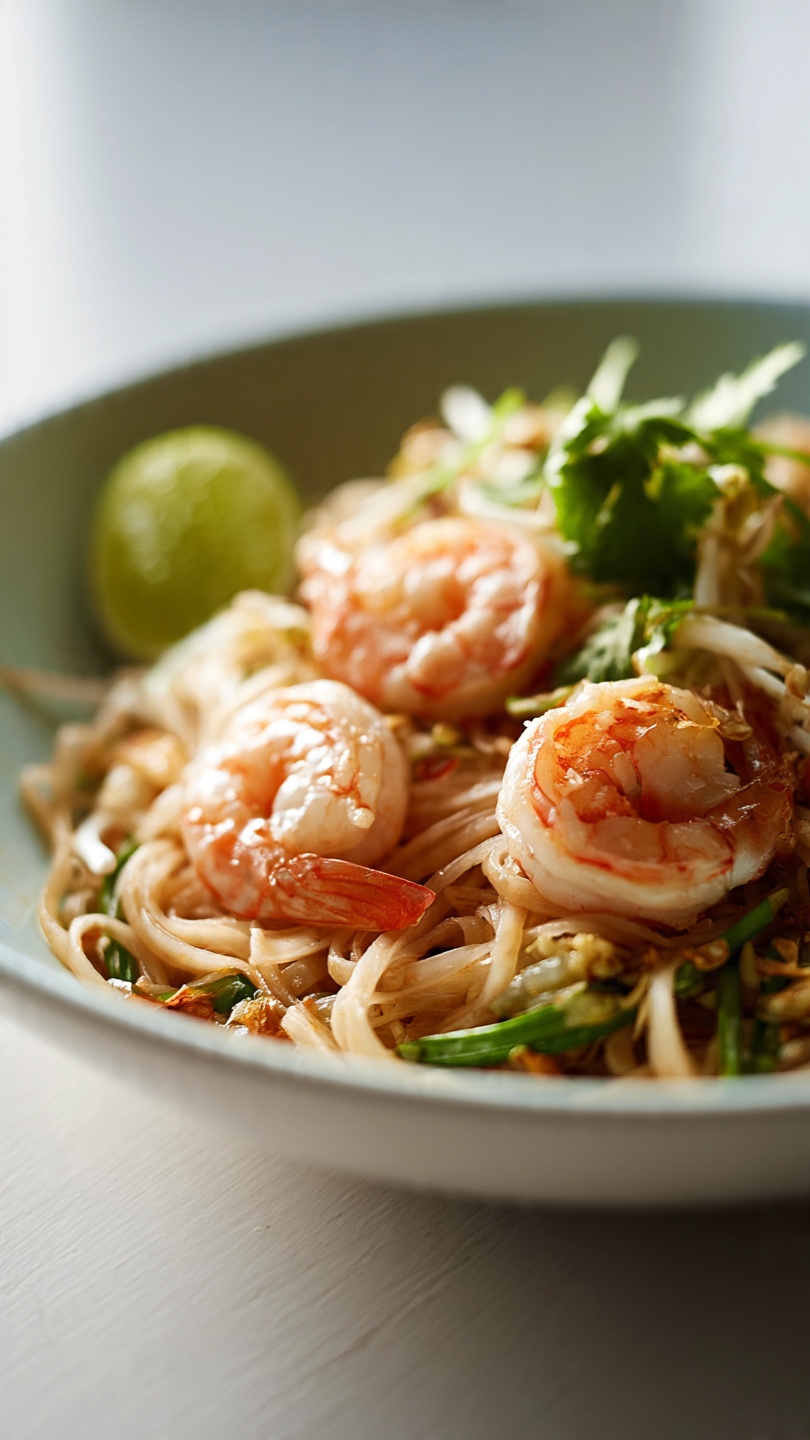
Shrimp Pad Thai
This shrimp pad thai is sweet, salty, and tangy in every bite, with juicy shrimp and silky rice noodles tossed in a glossy tamarind sauce in under 30 minutes.

Shrimp Pad Thai That Tastes Like Your Favorite Thai Takeout
If you have ever scrolled through dozens of noodle recipes easy enough for a weeknight but still bursting with real flavor, this shrimp pad thai is about to become your new favorite. It is sweet, salty, tangy, and just a little spicy, all tossed together in one hot pan in under 30 minutes. Juicy shrimp, silky rice noodles, and a glossy tamarind sauce come together in a dish that tastes like it came straight off a busy street cart in Bangkok, no reservation required.
What makes pad thai so beloved across the world of Asian cooking is how balanced it is. Every forkful hits sweet, sour, salty, and a little heat all at once, and once you understand that balance, you will never go back to bottled sauce again.
Good pad thai really does come down to having the right ingredients on hand. Tamarind paste, fish sauce, and proper flat rice noodles are not always sitting in the average pantry, and cooking everything in a flimsy nonstick pan instead of a sturdy wok makes a noticeable difference in how evenly the noodles cook. Stocking a few specialty items now means this dinner comes together in minutes the very next time the craving hits.
Why This Recipe Works
This version skips the shortcuts that often leave homemade pad thai tasting flat or gummy. A few things set it apart:
- The noodles are soaked, not boiled, so they stay tender without turning mushy once they hit the wok.
- A properly balanced tamarind sauce delivers the sweet, sour, and salty notes that make great Chinese cooking recipes and Thai noodle dishes alike so addictive.
- The shrimp gets a quick sear on its own first, so it stays plump instead of going rubbery in the final toss.
Chef's Tip: Soak your rice noodles in room temperature water rather than hot water. They will finish cooking in the wok, and starting them too soft leads to a sticky, broken mess by the time they hit the pan.
Ingredient Notes and Easy Swaps
Pad thai is wonderfully forgiving once you understand the basics behind it. If you are out of tamarind paste, a mix of fresh lime juice and a touch of brown sugar gets you close enough for a weeknight fix. No shrimp in the freezer? Sliced chicken thigh works beautifully, and going tofu only turns this into one of the better receitas vegetarianas you will find in the noodle dinner category.
This dish also fits neatly into the world of health dinner recipes when you keep the oil light and load up on bean sprouts and lime. Shrimp is naturally lean, so this plate delivers real protein without feeling heavy, which is more than a lot of deep fried takeout options can claim.
How to Make Shrimp Pad Thai
The method itself is simple once your ingredients are prepped: soak, sauce, sear, toss. Everything moves fast once the wok is hot, so have your noodles soaked and your sauce mixed before you even turn on the burner. This is exactly the kind of fast, photogenic dish that shows up so often in tasty recipes videos, because the whole cook happens in just a few sizzling minutes.
Ready to start cooking? Here is the full step by step recipe:
Shrimp Pad Thai
This shrimp pad thai is sweet, salty, and tangy in every bite, with juicy shrimp and silky rice noodles tossed in a glossy tamarind sauce in under 30 minutes.
Ingredients
- 8 oz flat rice noodles (pad thai style), dried, soaked in room temperature water until pliable
- 1 lb large shrimp, peeled and deveined
- 3 tbsp vegetable oil, divided
- 3 garlic, cloves, minced
- 1 shallot, thinly sliced
- 2 large eggs, lightly beaten
- 4 oz firm tofu, cubed, optional but traditional
- 1 1/2 cups bean sprouts, plus extra for garnish
- 1/2 cup garlic chives or green onions, chopped, plus more for garnish
- 2 tbsp tamarind paste, concentrated, not the watery juice
- 3 tbsp fish sauce, good quality
- 2 tbsp palm sugar or light brown sugar, packed
- 1 tbsp rice vinegar, unseasoned
- 1/4 cup roasted peanuts, crushed, for topping
- 1/2 tsp crushed red pepper flakes, optional, plus more for serving
- 1 lime, cut into wedges, for serving
Instruction
Place the dried rice noodles in a large bowl and cover with room temperature water. Let soak for 25 to 30 minutes, until pliable but still firm, then drain well.
In a small bowl, whisk together the tamarind paste, fish sauce, palm sugar, and rice vinegar until the sugar dissolves. Set this sauce aside.
Heat 1 tablespoon of oil in a wok or large skillet over high heat. Add the shrimp and cook for 1 to 2 minutes per side, until just pink and opaque. Remove and set aside.
Add another tablespoon of oil to the same wok. Add the garlic, shallot, and tofu, and stir-fry for 1 minute until fragrant.
Push everything to one side of the wok, pour in the beaten eggs, and scramble them in the open space until just set.
Add the soaked noodles and the tamarind sauce to the wok. Toss everything constantly using tongs for 2 to 3 minutes, until the noodles soften and soak up the sauce.
Return the cooked shrimp to the wok along with the bean sprouts and chopped garlic chives. Toss for another minute until everything is heated through.
Remove from heat and divide among plates. Top with crushed peanuts, extra bean sprouts, chili flakes, and a lime wedge before serving.
Equipment
- Wok or large nonstick skillet
- Tongs
- Mixing bowls
- Colander or fine mesh strainer
Notes
Serving and Storage
Pile the noodles into shallow bowls while they are still glossy and hot, and let everyone add their own peanuts, lime, and chili flakes at the table. That little bit of customization is half the fun of eating pad thai at all.
For leftovers:
- Store in an airtight container in the fridge for up to 3 days.
- Reheat in a hot skillet with a splash of water to loosen the noodles, since the microwave tends to make them clump together.
- Avoid freezing, as the noodles lose their texture once thawed and reheated.
Heads up: Bean sprouts and chives are best added fresh just before serving, even if you are reheating a batch of leftovers the next day.
Why You Will Keep Making This One
Between busy weeknights and lazy weekend cravings, this recipe earns its spot in regular rotation. It comes together faster than delivery, holds its own next to any restaurant version, and looks just as good on a plate as it does in any food videos cooking channel you have bookmarked. Once you taste how vibrant a homemade tamarind sauce can be, the store bought sauce packets will be hard to go back to.
Whether you landed here searching for healthy food dishes or simply wanted something more exciting than another bowl of pasta, shrimp pad thai earns its place as one of the most satisfying noodle dinners you can make at home, any night of the week.