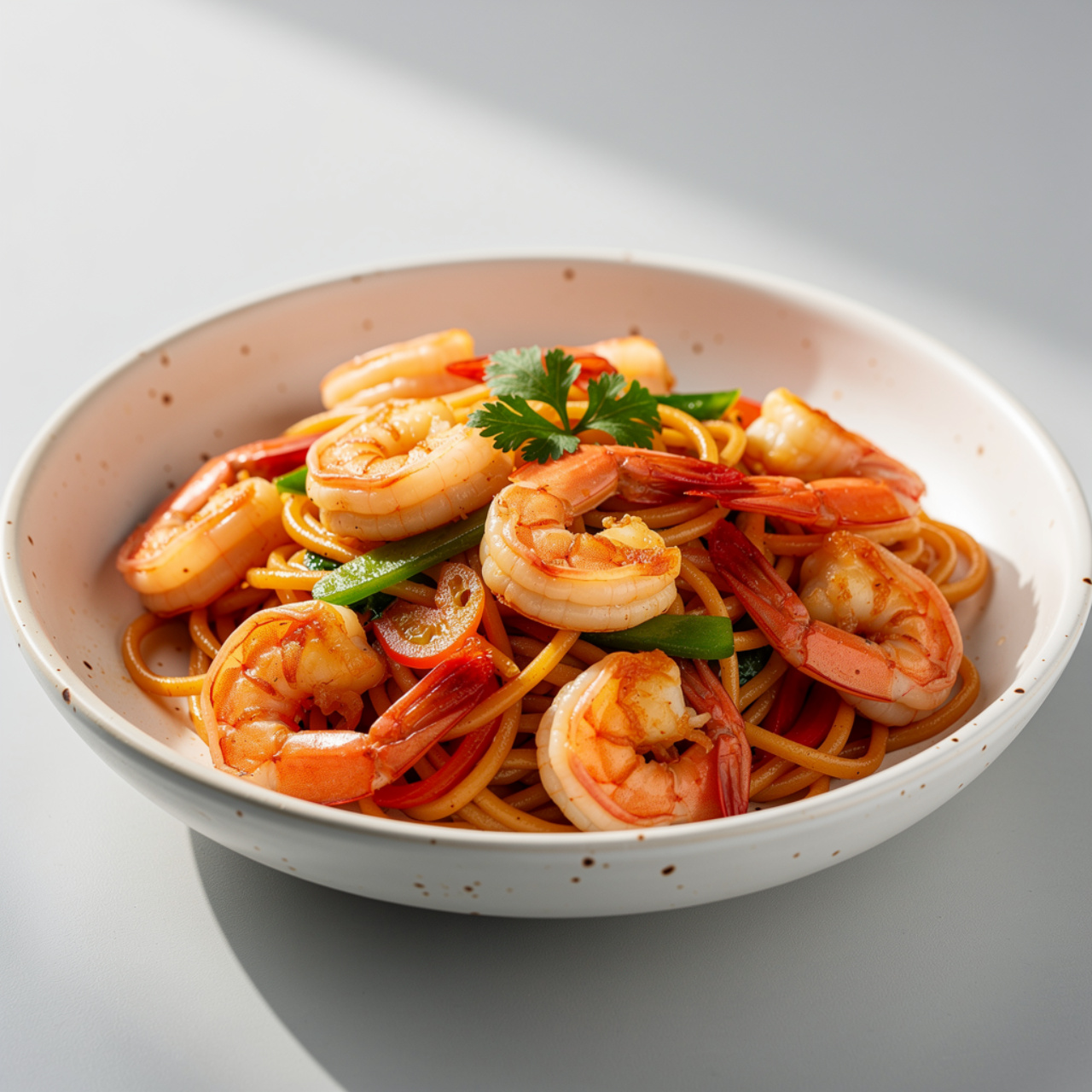
Shrimp Stir Fry with Rice Noodles (Easy Gluten Free Dinner)
This shrimp stir fry with rice noodles comes together in under 30 minutes with tender gluten free rice noodles, juicy shrimp, crisp vegetables, and a savory-sweet sauce that tastes better than takeout.

The Weeknight Stir Fry That Tastes Like It Took All Day
If you have been searching for an easy rice noodle stir fry that actually delivers on flavor without requiring a culinary degree or a 45-minute grocery list, this is the one. This shrimp stir fry with rice noodles is bright, savory, just a little sweet, and comes together start to finish in under 30 minutes. It is the kind of dinner that makes a regular Tuesday night feel like a treat.
What really sets this recipe apart from a lot of Asian rice noodle recipes is the sauce. It is built around a bold base of tamari, oyster sauce, and a touch of honey, then finished with toasted sesame oil right at the end. The cornstarch slurry pulls everything together into a glossy, clingy coating that sticks to every strand of noodle and every piece of shrimp. No watery, sad sauce here.
Why This Recipe Works for Gluten Free Households
One of the best things about this gluten free rice noodle stir fry is how naturally it accommodates a gluten free lifestyle. Rice noodles contain no wheat at all, which makes them a staple in so many GF rice noodle recipes across Southeast Asian cuisines. The key is choosing the right supporting ingredients. Swap standard soy sauce for certified gluten free tamari, reach for a GF-labeled oyster sauce, and you have a completely gluten free rice noodle dish that nobody at the table will feel was a compromise.
This is genuinely one of those gluten free noodle stir fry recipes that tastes indulgent rather than restricted, and that matters.
Choosing Your Ingredients and Tools
Getting this stir fry right comes down to a few non-negotiables: very hot heat, dry shrimp, properly soaked noodles, and a good wok. The right tools and pantry staples make a noticeable difference in the final dish, especially when it comes to achieving that wok-kiss char on the vegetables.
The Noodles
For this stir fry with rice noodles, medium-width rice noodles (often labeled rice sticks or pad Thai noodles) are the sweet spot. They are sturdy enough to toss in a hot wok without turning to mush, and they soak up sauce beautifully. Soak them in warm, not boiling, water until just pliable, then drain and toss immediately with a bit of sesame oil. This prevents them from clumping while you cook everything else.
The Shrimp
Dry shrimp is everything in this recipe. Pat them thoroughly with paper towels before they hit the pan. Moisture is the enemy of a good sear. You want that slightly golden, just-caramelized edge on the shrimp rather than a steamed, pale result. Large or extra-large shrimp work best here because they cook quickly and stay juicy.
The Vegetables
Broccoli, snap peas, and red bell pepper are a personal favorite trio for this easy rice noodle stir fry, but this recipe is forgiving. Bok choy, shredded cabbage, carrots, mushrooms, and baby corn all work well. The rule is to cut everything thin and uniform so it cooks at the same rate.
Chef's Tip: Never crowd your wok. If your pan is smaller than 12 inches, cook the shrimp and vegetables in batches. Crowding drops the temperature instantly and you will end up steaming instead of stir-frying. A proper sear is what gives this dish its depth.
Building the Sauce from Scratch
The sauce for this stir fry recipe with rice noodles is a simple mix you can whisk together in about two minutes. Tamari brings the salty umami backbone. Oyster sauce adds a deep, slightly briny sweetness that you cannot fake. Rice vinegar lifts the whole thing with a gentle tang. Honey rounds out the edges. And the cornstarch slurry transforms it from a thin liquid into a gorgeous, glossy coating.
Make it ahead if you want. The sauce holds in the fridge for up to a week, which means you can double the batch and have the makings of another fast weeknight dinner ready to go.
Tips for Stir Fry Success Every Time
- Mise en place is essential. Stir frying moves fast. Have every ingredient prepped, measured, and within arm's reach before the wok hits the heat.
- High heat the whole time. This is not a low-and-slow situation. Keep that flame cranked.
- Add the garlic and ginger late. They go in after the vegetables soften, not before. Adding them to the empty pan risks burning them, which turns bitter quickly.
- Noodles go in dry. Shake off every drop of water before they hit the wok. Wet noodles steam rather than fry.
Ready to bring it all together? Here is the complete step-by-step recipe:
Shrimp Stir Fry with Rice Noodles (Easy Gluten Free Dinner)
This shrimp stir fry with rice noodles comes together in under 30 minutes with tender gluten free rice noodles, juicy shrimp, crisp vegetables, and a savory-sweet sauce that tastes better than takeout.
Ingredients
- 8 oz dried rice noodles, medium width, soaked according to package directions
- 1 lb large shrimp, peeled and deveined, tails removed
- 1 tbsp sesame oil, toasted, divided
- 2 tbsp vegetable oil, or any neutral high-heat oil
- 4 garlic cloves, minced
- 1 tbsp fresh ginger, peeled and grated
- 1 red bell pepper, thinly sliced
- 2 cups broccoli florets, cut into small pieces
- 1 cup snap peas, strings removed
- 3 green onions, thinly sliced, whites and greens separated
- 3 tbsp gluten free tamari or soy sauce, use certified gluten free tamari to keep the dish GF
- 2 tbsp oyster sauce, use gluten free oyster sauce if needed
- 1 tbsp rice vinegar
- 1 tbsp honey, or maple syrup for vegan option
- 1 tsp cornstarch, mixed with 2 tbsp cold water to make a slurry
- 1/4 tsp red pepper flakes, optional, adjust to taste
- 1 tbsp sesame seeds, for garnish
Instruction
Soak the rice noodles in warm water for 10 to 12 minutes until pliable but not fully soft. Drain well and toss with 0.5 tbsp of the sesame oil to prevent sticking. Set aside.
In a small bowl, whisk together the tamari, oyster sauce, rice vinegar, honey, remaining 0.5 tbsp sesame oil, red pepper flakes, and the cornstarch slurry. Set the sauce aside.
Pat the shrimp very dry with paper towels. Season lightly with a pinch of salt and white pepper if desired.
Heat a large wok or 12-inch skillet over high heat until very hot, about 2 minutes. Add 1 tbsp vegetable oil. Add the shrimp in a single layer and cook undisturbed for 60 to 90 seconds until pink on the bottom. Flip and cook another 30 to 60 seconds. Transfer to a plate immediately so they do not overcook.
Return the wok to high heat and add the remaining 1 tbsp vegetable oil. Add the broccoli florets and stir-fry for 2 minutes. Add the red bell pepper and snap peas and stir-fry for another 2 minutes until the vegetables are crisp-tender.
Add the garlic, ginger, and the white parts of the green onions. Stir-fry for 30 seconds until fragrant.
Add the drained rice noodles to the wok and toss well to combine with the vegetables, using tongs to separate any clumps.
Pour the sauce over everything and toss constantly for 1 to 2 minutes until the sauce thickens and coats the noodles evenly.
Return the cooked shrimp to the wok and toss just until heated through, about 30 to 60 seconds.
Remove from heat. Serve immediately topped with the green parts of the green onions and sesame seeds.
Equipment
- Large wok or 12-inch skillet
- Tongs
- Small mixing bowl
- Cutting board and sharp knife
- Box grater or microplane (for ginger)
- Colander
- Measuring spoons and cups
Notes
Serving, Storing, and Variations
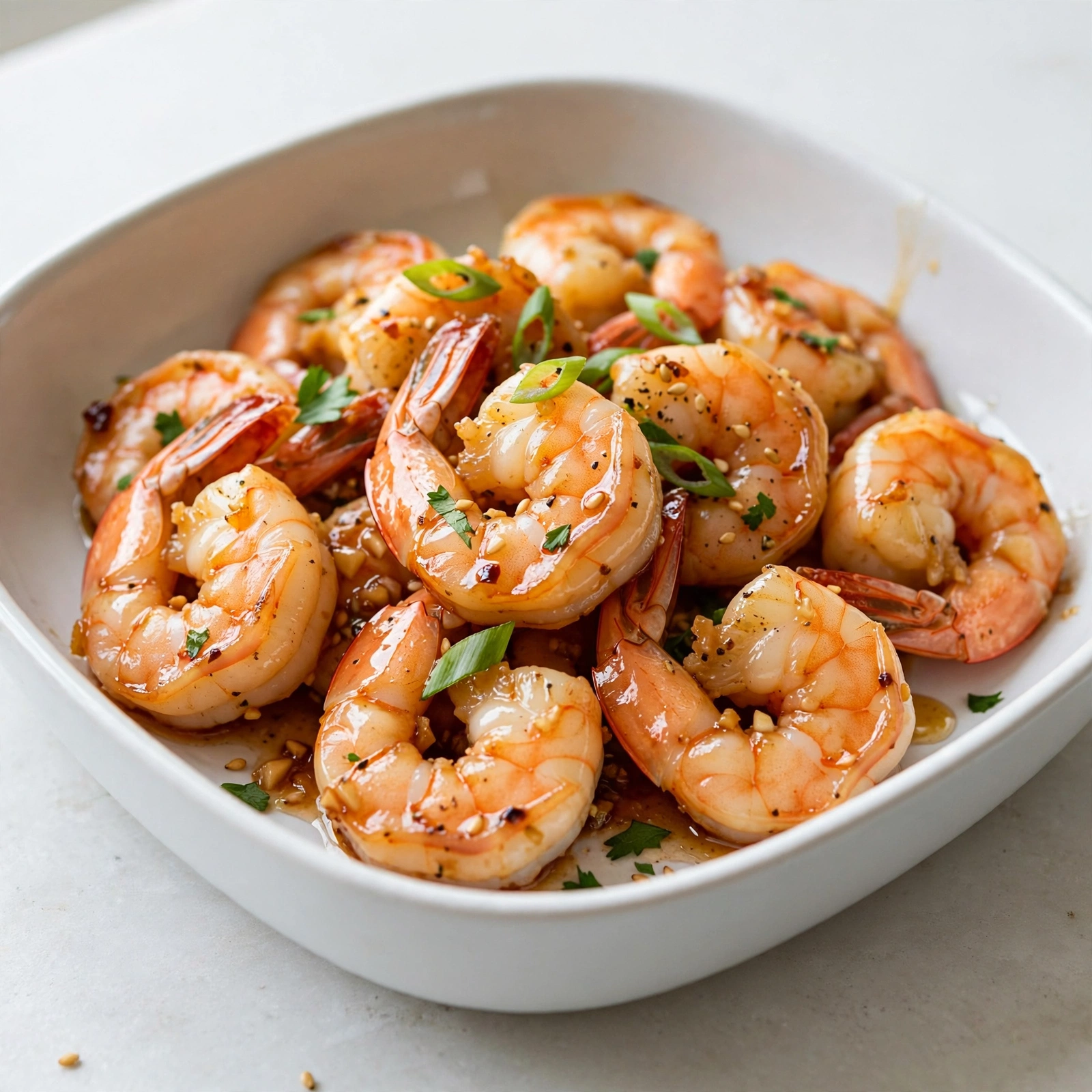
Serve this shrimp stir fry with rice noodles straight from the wok while the noodles are still silky and the shrimp are tender. A scatter of sesame seeds and sliced green onion tops is all it needs. A wedge of lime on the side is a welcome addition if you like a little brightness.
For variations: Swap shrimp for thinly sliced chicken thighs or pressed tofu for a different take on these gluten free rice noodle dishes. Add chili oil or sambal at the table for heat. Stir in a handful of fresh Thai basil or cilantro right before serving for an herby lift.
Leftovers reheat beautifully in a hot skillet with a small splash of water. They keep for up to three days in the fridge, though the noodles are at their absolute best on day one.